Scalable Accreditation System for International Football Events
Overview
Large international football events require complex accreditation systems that allow thousands of participants to register, verify their identities, and receive access credentials for stadiums and event locations.
For the UEFA Euro U21 tournament, I designed and developed a new accreditation platform for the Football Association of Slovenia. The system needed to support both remote registrations and on-site accreditation processing at stadiums, while ensuring a fast and reliable experience for users and administrators.
Following the successful deployment during the UEFA Euro U21 event, the system was later adopted as the primary accreditation platform used by the Football Association of Slovenia for national league competitions and national team matches.
The Challenge
Event accreditation systems must support a wide range of user types, from journalists and staff to volunteers and event personnel, all applying for access permissions within a limited timeframe.
The system needed to address several key challenges:
- High traffic volumes during registration periods
- Multiple user profiles and accreditation types
- Support for remote registration and on-site accreditation processing
- Reliable photo capture and document submission
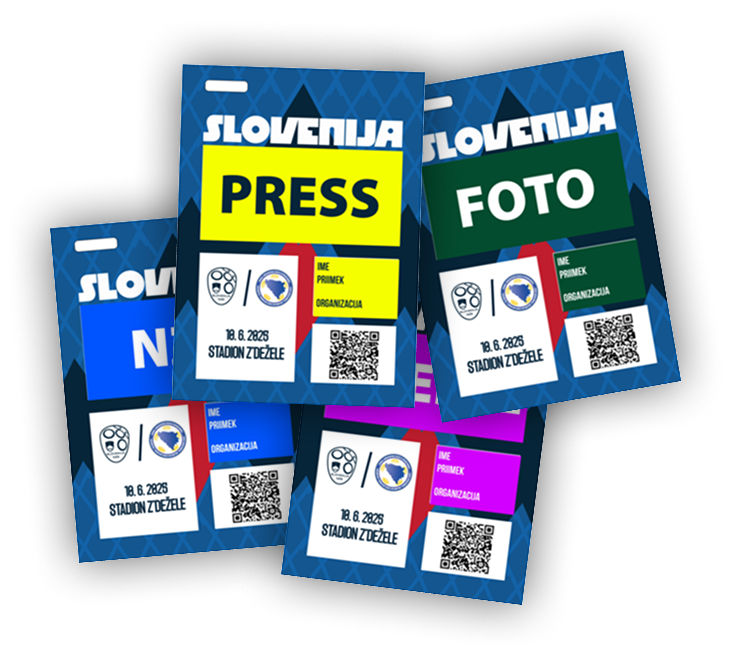
- Printing accreditation badges in offices and stadium locations
- Different administrative access levels for event staff
The platform also needed to support different competitions, stadiums, and operational workflows, while remaining simple enough to use under high-pressure event conditions.
Users
The accreditation system served a wide variety of users, including:
- Media Representatives
Journalists and photographers requiring event access.
- Event Staff and Volunteers
Operational personnel working at stadiums and event locations.
- Officials and Organisers
Competition administrators and technical staff.
Users interacted with the system in two primary environments:
- remotely from their homes or offices
- on-site at stadium accreditation centers
Because of this, the experience needed to work reliably across desktop computers, mobile devices, and on-site registration setups.
Constraints
Designing the system required balancing usability with operational requirements.
Key constraints included:
- High volumes of on-site registrations during event days
- Frictionless photo upload process using webcams or mobile devices
- Manual verification of each accreditation request by administrators
- Multiple competitions and stadium environments to support
- Fast badge printing in different locations
The system also needed to be flexible enough to support future competitions beyond the initial UEFA event.
My Approach
To design a reliable accreditation workflow, I focused on identifying friction points and simplifying the entire registration and verification process.
Identified common usability issues in accreditation workflows across different user types.
Conducted UX analysis of registration and verification processes to find opportunities for simplification.
Mapped user journeys for applicants and administrators to understand end-to-end workflows.
Created interactive prototypes of simplified flows to validate design decisions early.
Tested and refined the system based on feedback from previous events, ensuring the platform would work effectively in both remote and high-pressure on-site environments.
Key Insights
Several insights shaped the final system design:

The Solution
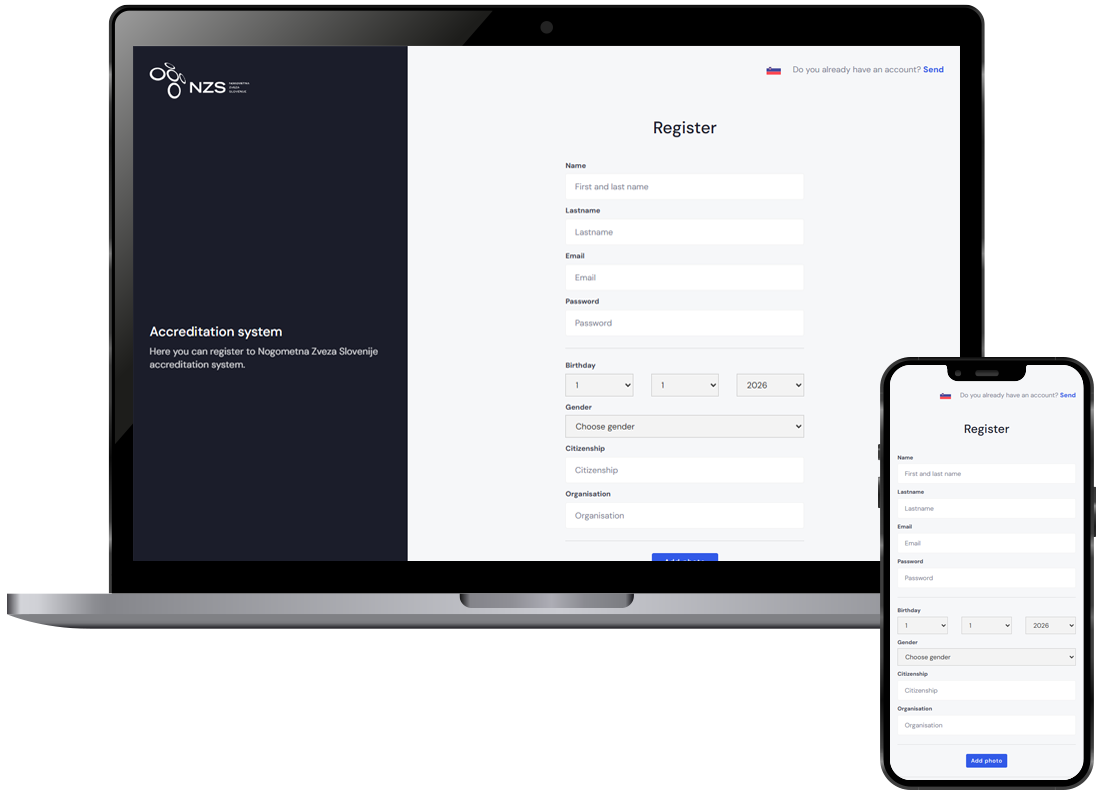
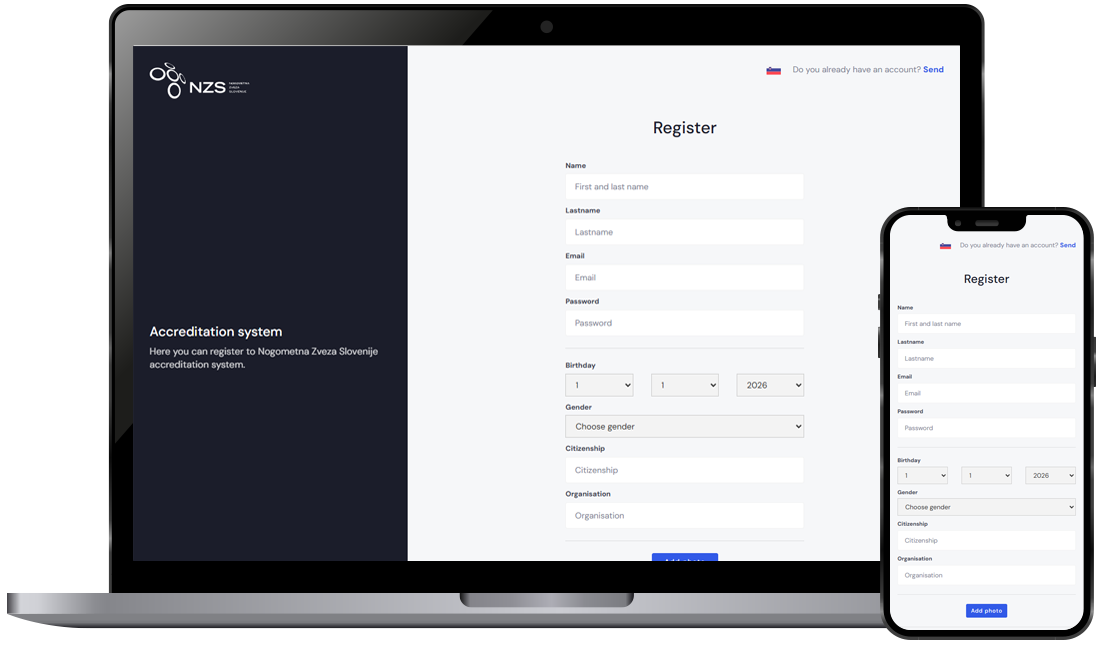
Easy Low Effort Registration Process
An easy low effort registration flow guided users through the application process, reducing complexity and minimizing input errors.
This structure helped applicants clearly understand the requirements and complete the process quickly.
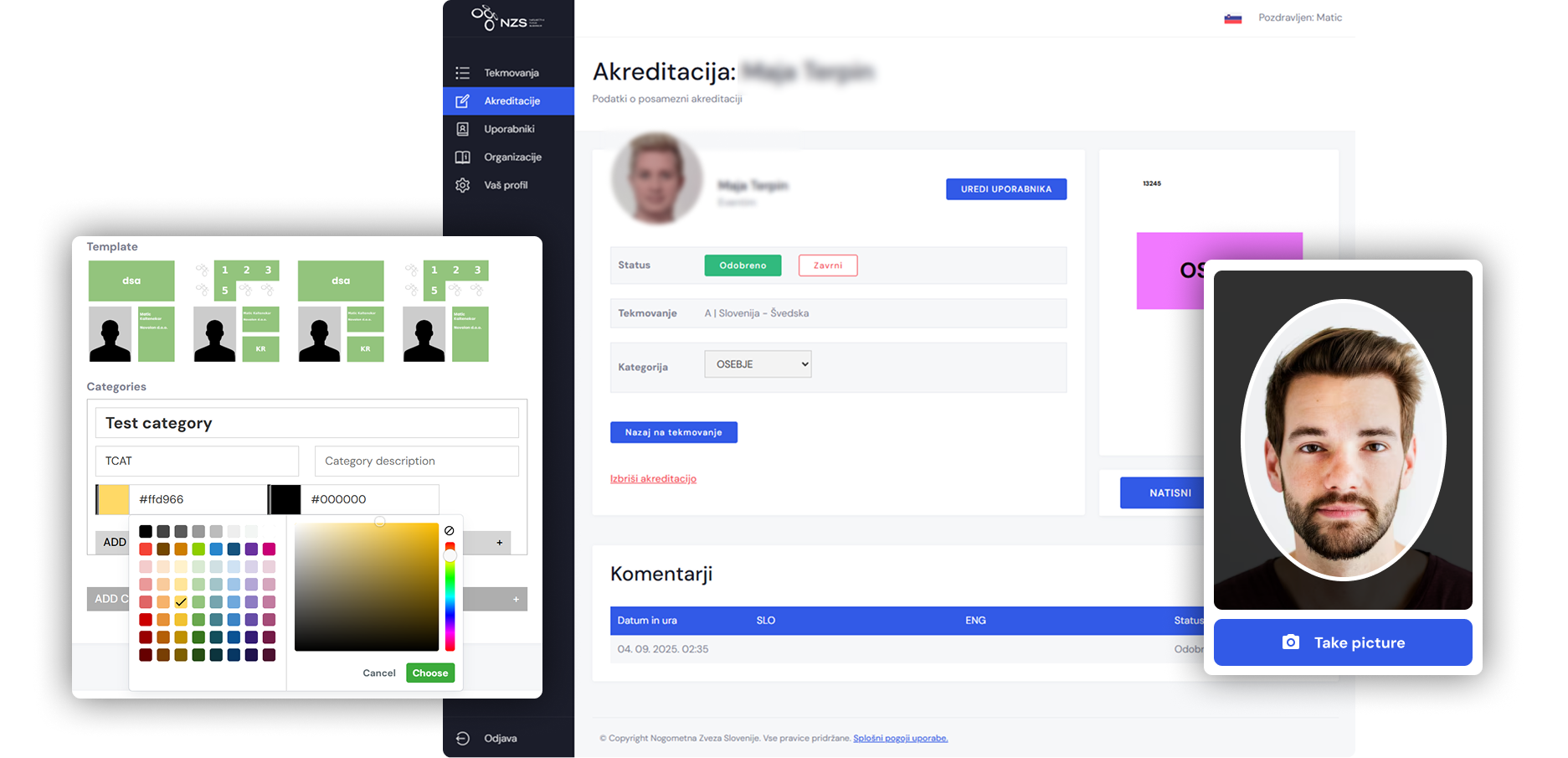
Flexible Photo Upload System
Applicants could submit their accreditation photo using multiple input methods:
- uploading an existing image
- capturing a photo using a device camera
- capturing a photo via webcam
This flexibility allowed both remote applicants and on-site accreditation centers to easily capture required images.

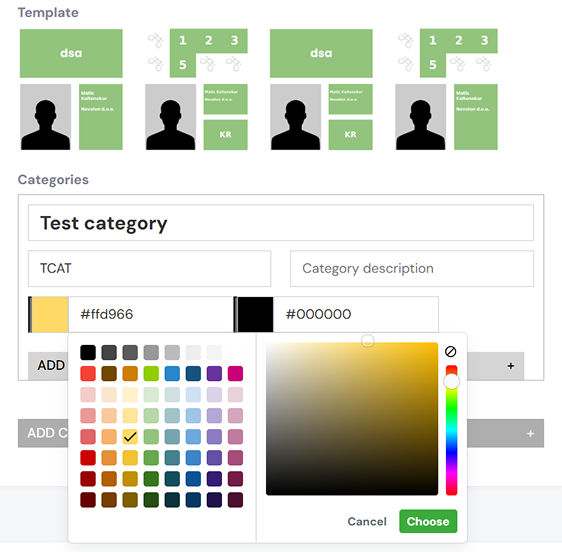
Flexible Content Configuration
The system was designed so administrators could easily adapt the accreditation process for different competitions and events without rebuilding the platform.
This allowed organisers to quickly configure:- competition-specific forms and accreditation types
- stadium or venue access requirements
- automated email notifications to streamline the approval process
This flexibility made it possible to reuse the same system across multiple competitions, stadiums, and operational setups with minimal adjustments.
Administrative Review Workflow
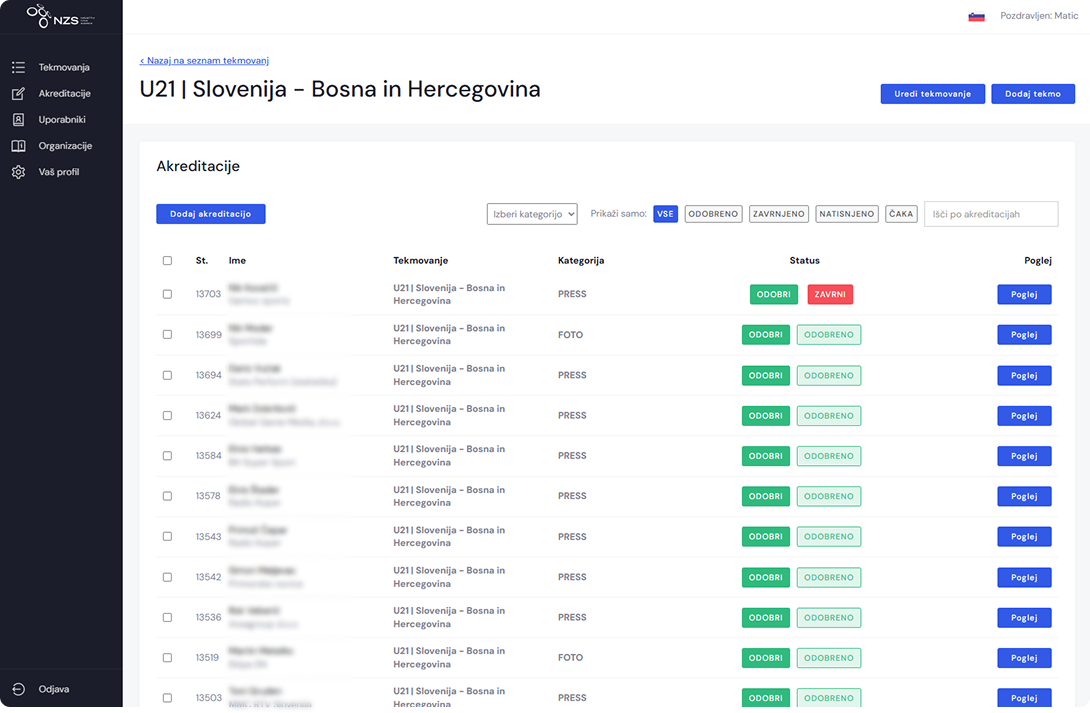
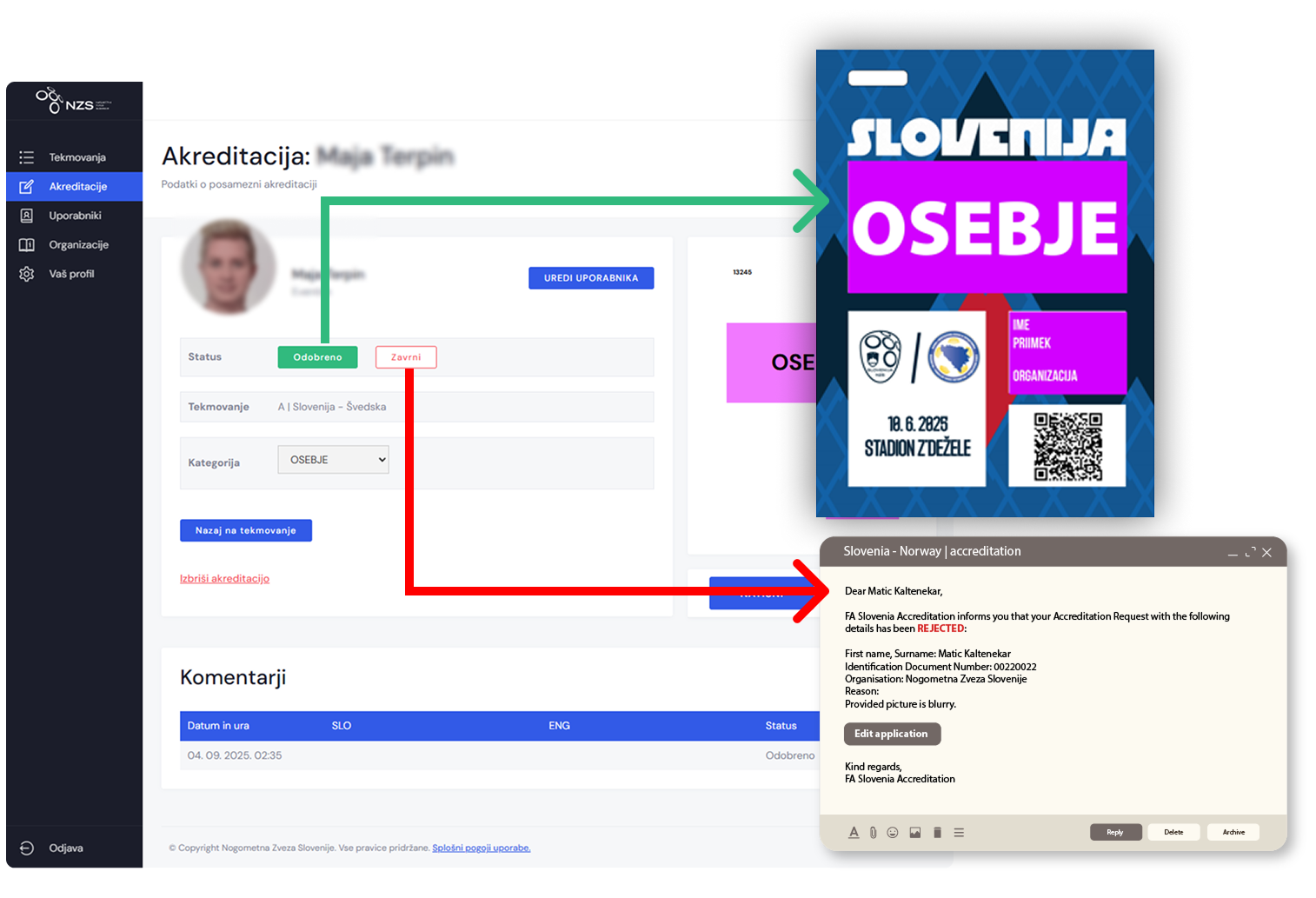
Since every accreditation request required manual approval, the system included an administrative dashboard designed to support efficient review processes.
Administrators could:
- review submitted information and documents
- approve or reject applications
- automatically notify applicants of the decision
This streamlined verification and reduced administrative overhead during events.
Multi-Competition System Architecture
Rather than designing a system for a single event, the platform was built as a reusable accreditation infrastructure.
This allowed the same system to support:
- UEFA tournaments
- national league competitions
- national team matches
- different stadium environments
After the UEFA Euro U21 tournament, the system was adopted as the standard accreditation platform for the Football Association of Slovenia.
Results
The accreditation system successfully supported large-scale event operations while maintaining an extremely low error rate.
Key outcomes included:
- More than 50,000 accreditation applications processed
- Only 0.03% of users experiencing issues during registration
- Zero spam submissions
- Fast manual validation workflow for administrators
- Reusable system now used across multiple football competitions
The platform proved reliable both during large international events and ongoing domestic competitions.
What I Learned
Designing systems for live events requires balancing usability with operational efficiency. Registration workflows must be simple for users while providing administrators with the tools they need to manage large volumes of applications quickly.
By focusing on clarity, flexibility, and validation, it is possible to create systems that remain reliable even under the demanding conditions of international sporting events.