Scalable Charity Application Systems
Overview
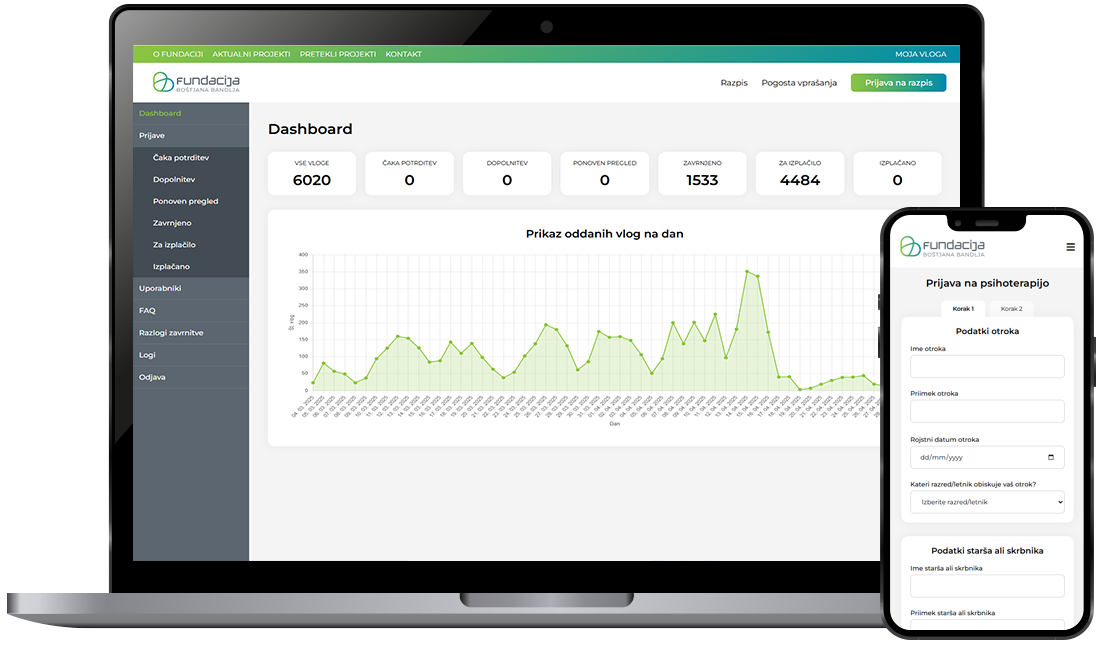
The Boštjan Bandelj Foundation runs large-scale charitable initiatives that provide financial assistance to specific groups of people, such as young families or individuals receiving disability pensions.
Each project requires thousands of applicants to submit documentation and personal information within a limited timeframe. Because the foundation manually verifies every application, the system needed to support both a seamless user experience for applicants and an efficient verification process for administrators.
My role was to design and implement reusable application flows that could support high traffic volumes, diverse user profiles, and strict data verification requirements.
The Challenge
Each charity program targeted different groups and had unique eligibility requirements, yet all projects needed a reliable and scalable application system.
Several challenges needed to be addressed:
- Very high application volume within a short time period
- A wide range of users with different technical abilities
- Strong mobile usage expectations
- Document uploads and identity verification requirements
- Manual verification of each submitted application by administrators
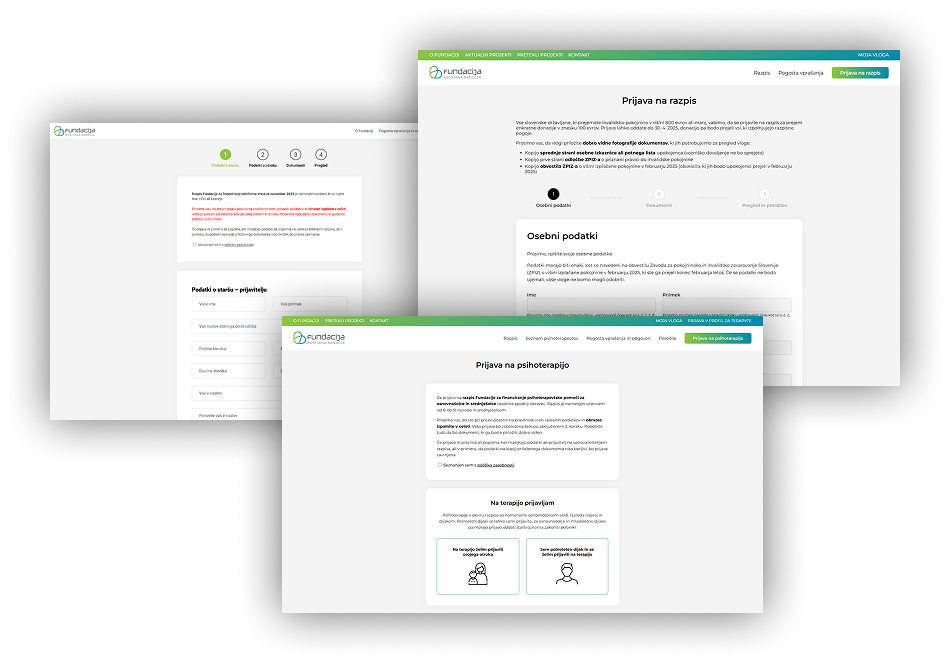
For example, one initiative supporting young parents covered one month of kindergarten costs, with a limit of 10,000 approved applicants under the age of 33. The application system received over 20,000 submissions in a short period of time.
Another initiative provided €200 grants to pensioners receiving disability pensions, requiring users to upload three documents to verify eligibility. This project also had to be designed with accessibility and elderly users in mind.
Users
Applicants represented a very diverse demographic group, including:
- Young families
Applying for financial support related to childcare.
- Elderly users receiving disability pensions
Often less familiar with digital forms and online processes.
Because many applicants were not highly tech-savvy, the experience needed to be simple, clear, and forgiving of mistakes.
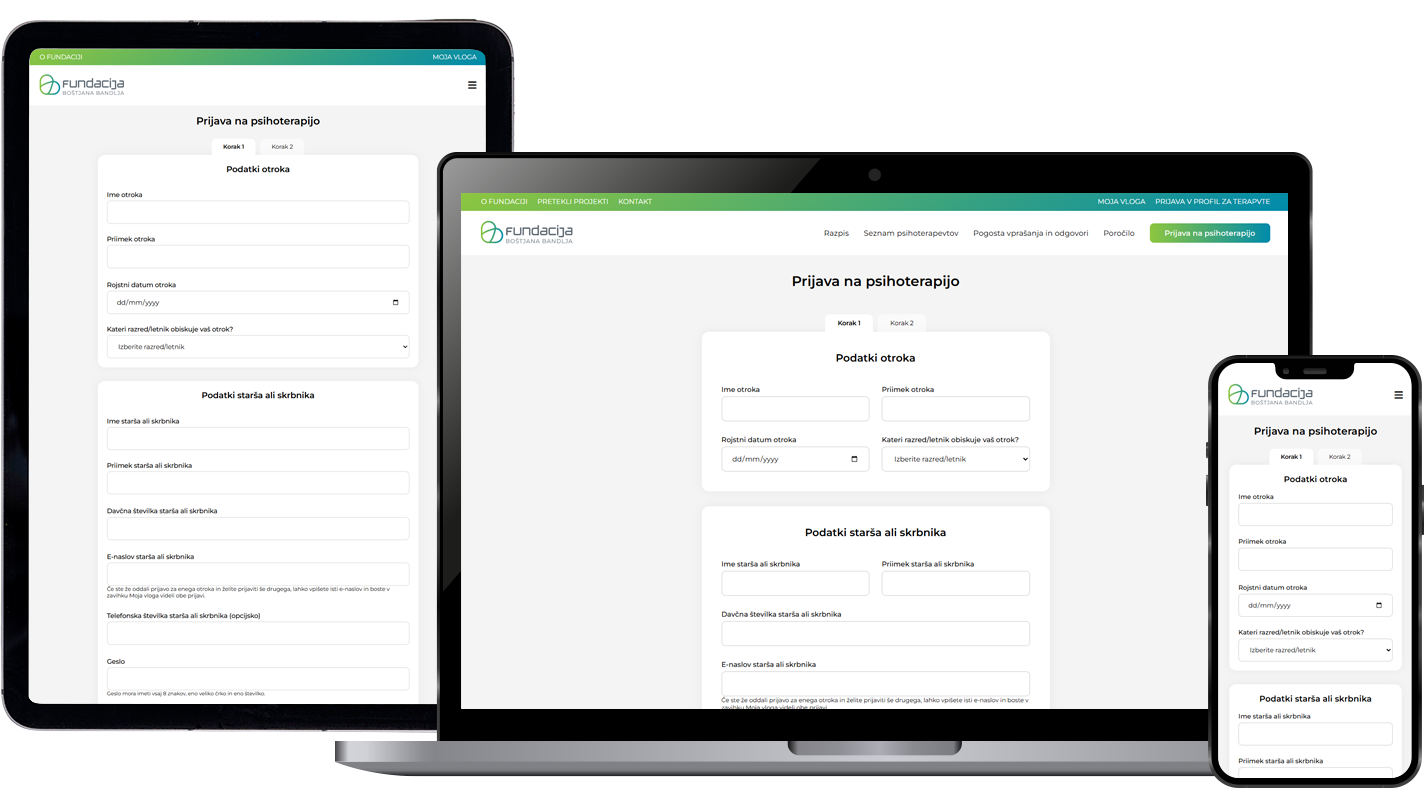
Usage data later showed that 66.4% of applications were submitted via mobile devices, confirming the importance of a mobile-first experience.
Constraints
The system needed to satisfy both user and administrative requirements simultaneously.
Key constraints included:
- Extremely high application volume in a short timeframe
- Strict eligibility validation requirements
- Sensitive personal data and documentation handling
- Administrative verification of every submission
- The need to avoid calculation or eligibility errors due to the nature of the charity funding
Additionally, the solution needed to support different charity programs without rebuilding the entire application system each time.
My Approach
To ensure the system worked effectively for both applicants and administrators, I focused on identifying friction points and designing a streamlined workflow.
Identified potential usability issues for different user groups, including elderly and less tech-savvy applicants.
Analysed common pain points in complex forms to reduce friction and error rates.
Mapped user journeys for both applicants and administrators to understand end-to-end workflows.
Created prototypes of simplified application flows to validate design decisions early.
Tested and refined flows based on feedback from previous projects, allowing the system to continuously improve with each new initiative.
Key Insights
Several insights shaped the final solution:
The Solution
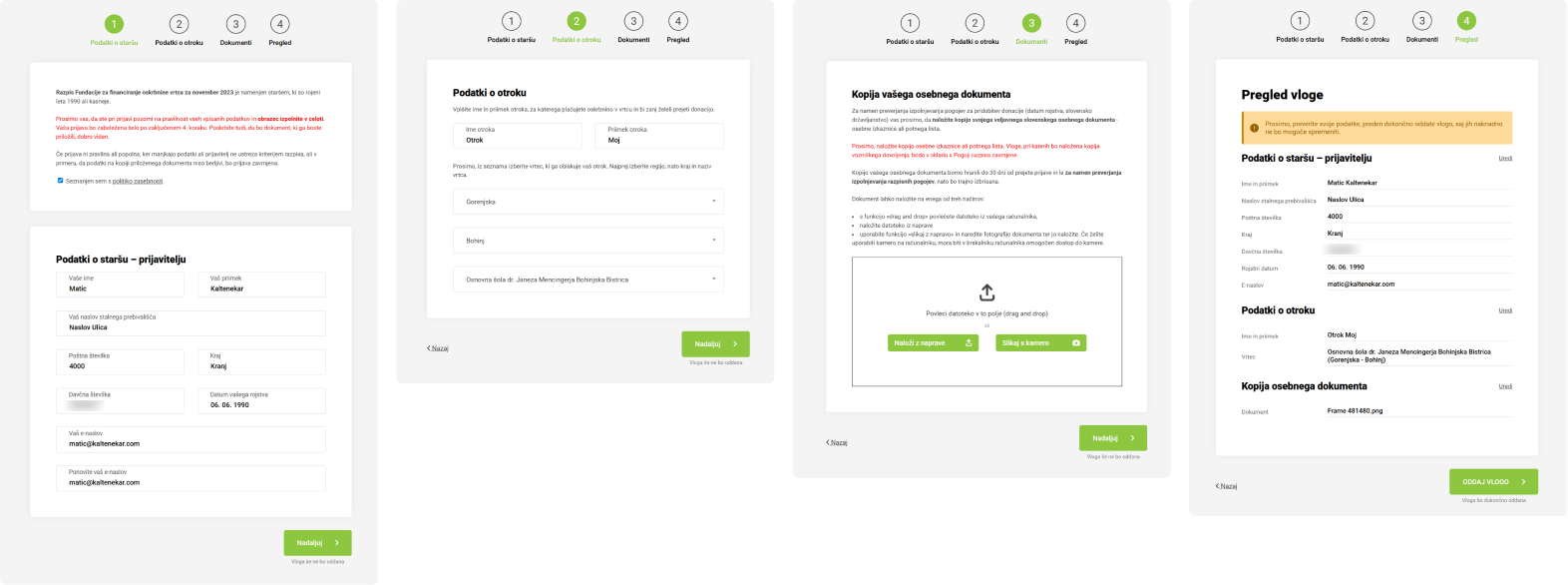
Guided Multi-Step Application Flow
A multi-step form guided users through the process step by step, reducing cognitive overload and preventing errors.
This approach helped users focus on one task at a time while maintaining clarity about their progress.
Flexible Document Upload System
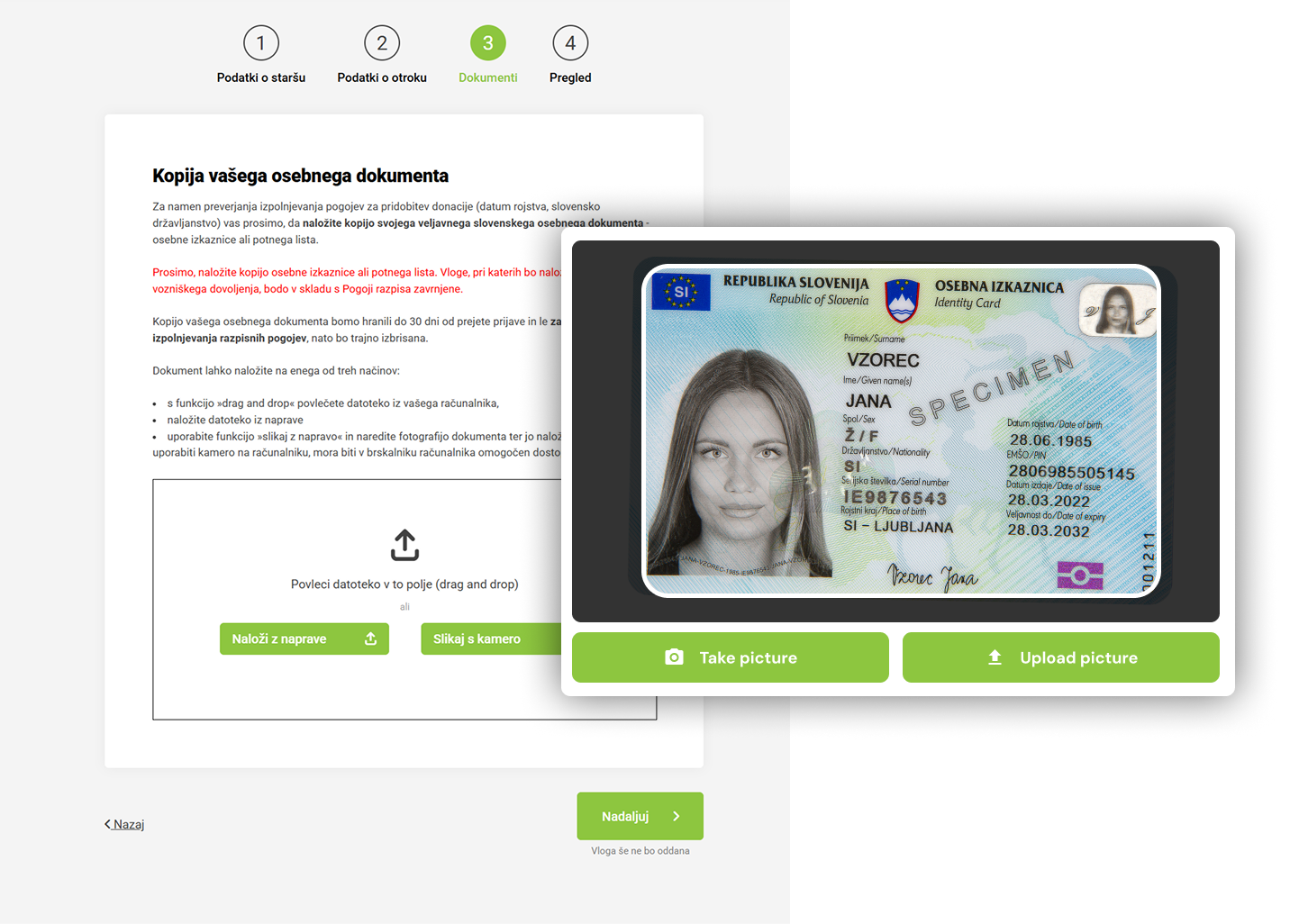
Applicants were able to submit required documents using several methods:
- uploading files from their device
- capturing photos using a phone camera
- using a computer webcam
This flexibility made document submission significantly easier for mobile users and elderly applicants.
Advanced Validation and Fraud Prevention
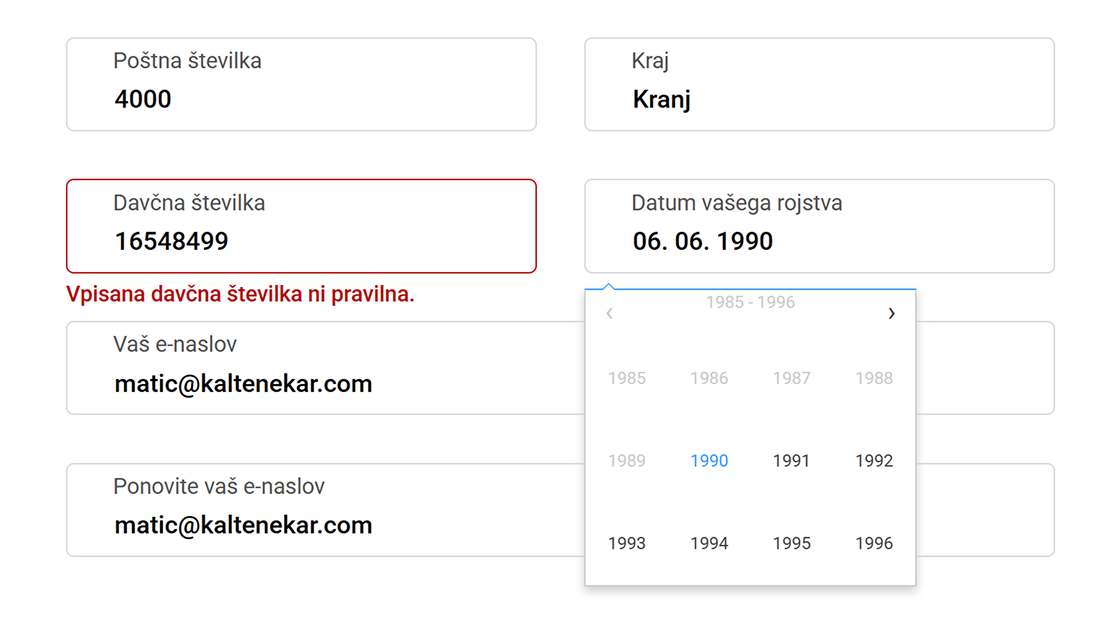
To ensure data accuracy and prevent abuse of the system, strong validation rules were implemented.
These included:- real-time validation of personal tax numbers (davčna številka)
- robust form validation to prevent incomplete submissions
- protections against automated bot submissions
Across all projects, this resulted in zero spam submissions.
Administrative Verification Workflow
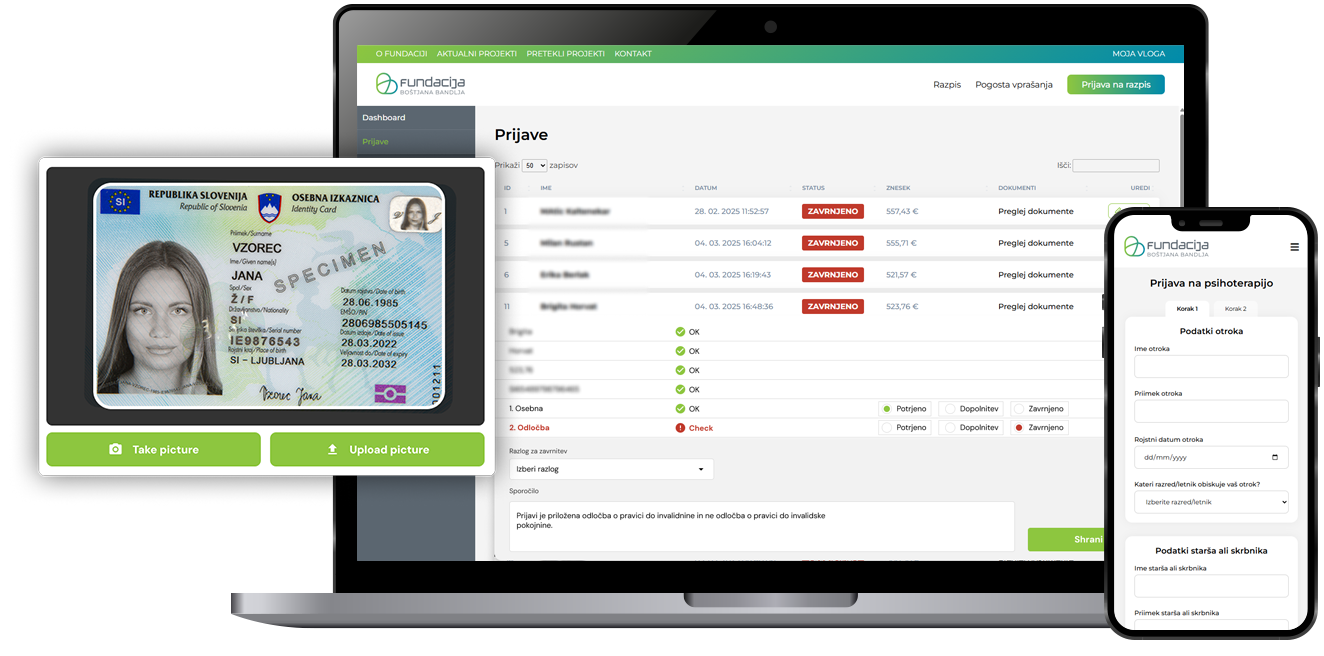
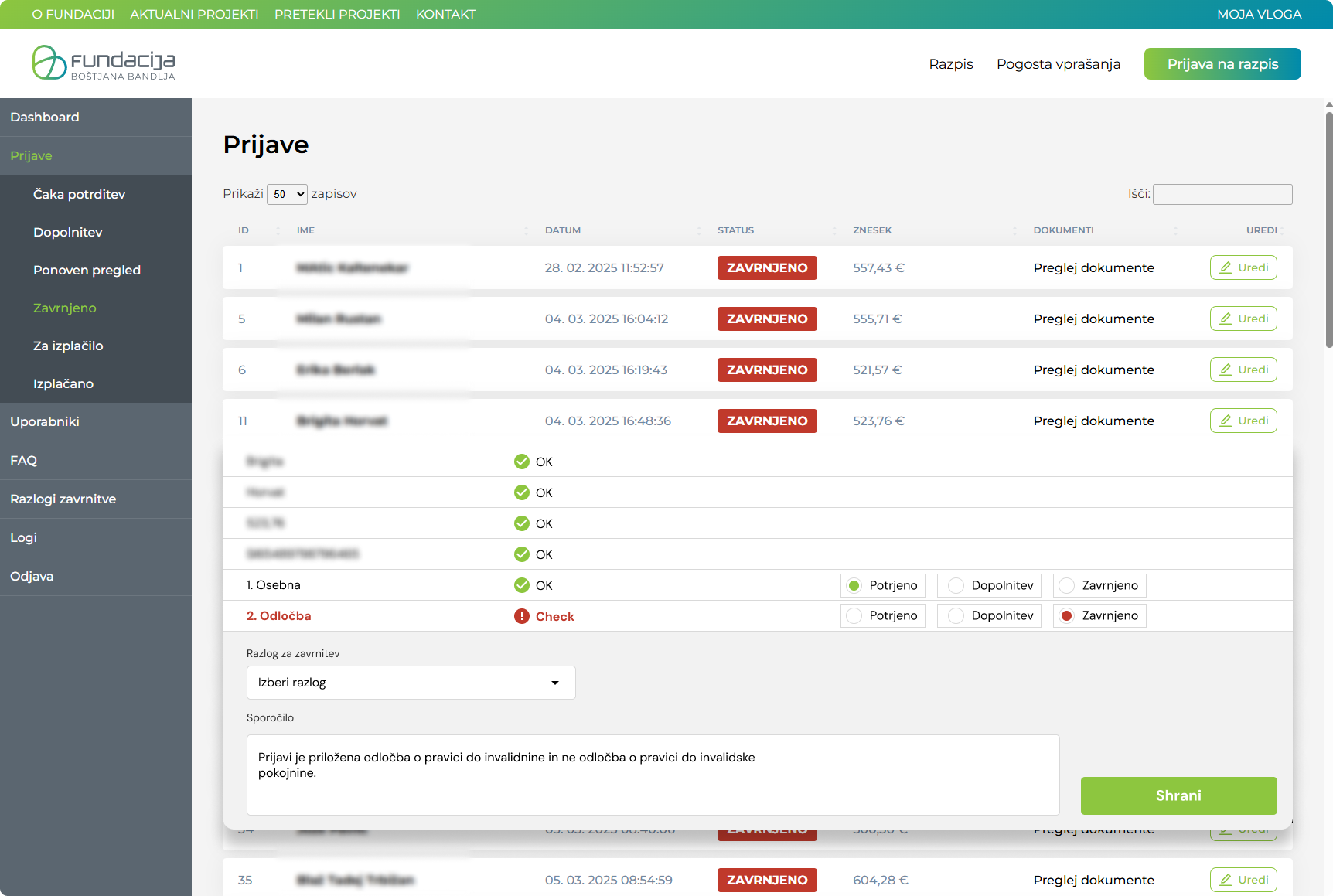
Because every application had to be manually reviewed, the administrative interface was designed to support fast document verification and decision-making.
The system allowed administrators to efficiently review submissions and supporting documents in a structured interface.
This enabled verification speeds of up to 400 applications per hour per administrator.
Reusable Project Infrastructure
Instead of building separate systems for each charity program, the application framework was designed to be reusable.
New initiatives could reuse the existing infrastructure with minimal adjustments, significantly reducing development and operational overhead.
Results
The system successfully supported high-volume charity programs while maintaining an extremely low error rate.
Key outcomes included:
- More than 60,000 applications processed
- Only 0.02% of users experiencing issues during application
- Zero spam submissions across projects
- Administrative verification speeds of up to 400 applications per hour
- Reusable infrastructure used across multiple charity initiatives
These results demonstrated that complex charity application processes can remain highly accessible when designed with careful attention to user needs and workflow efficiency.
What I Learned
This project reinforced how important clarity, validation, and accessibility are when designing systems for large and diverse user groups.
Even relatively simple interfaces can become complex when thousands of people rely on them simultaneously. By focusing on reducing friction and structuring workflows carefully, it is possible to create systems that serve both users and administrators effectively.